Scroll down to learn about the virtues of upzoning and how to bring it into Frelard. This website was built to address frequently asked questions and concerns about upzoning using the best evidence from modern research. You’ll find links to articles, podcasts, and videos if you want to learn more deeply. There are also pictures from around Frelard to better understand how zoning has consequences.
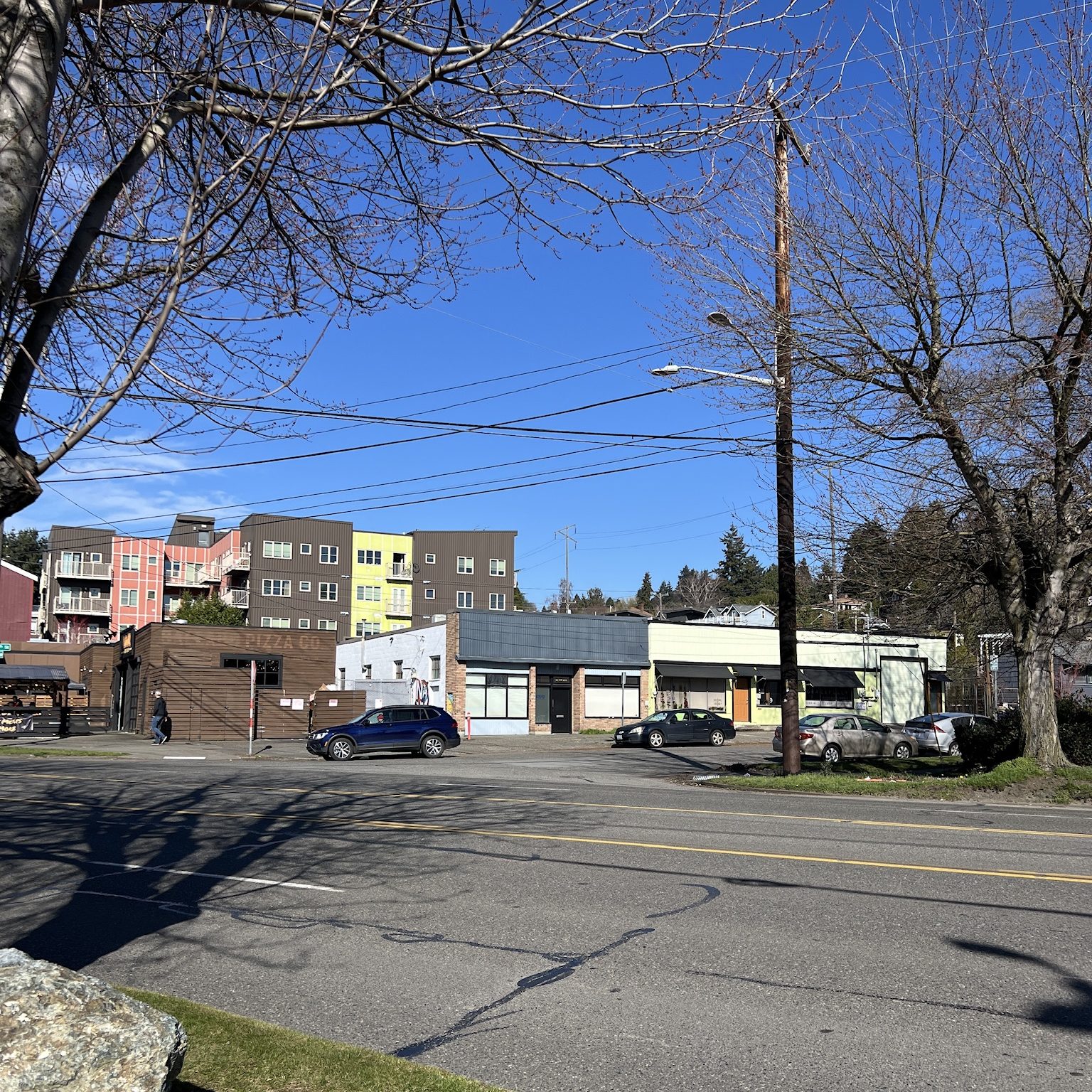
NW 40th Street & Leary Way NW. Housing could easily fit above these shops if the landowner wanted to build it, but current zoning laws forbid it—why?! Ask city council to upzone Frelard!
How to upzone:
Take action: Tell city council you support further upzoning. Write, email, or call (leave a message). While you probably won’t hear back, they are listening! Whether you do it for yourself, to help others, or for justice, voicing support for upzoning will make a difference.
Write a letter to our city council representative, Dan Strauss (Dan.Strauss@seattle.gov), telling him that you support upzoning Frelard. Consider mentioning the following:
Who are you?
Do you live or work in Fremont, Ballard, or Frelard?
What future do you hope for living in Frelard?
Do you support upzoning (density and mixed-use) in Frelard and why?
Leave a short voice message. Call 206-684-8806 and say this: Hi Dan! My name is ____________. My number is ____________. Frelard is where I live/work. Please upzone Frelard because….
I want my property value to increase.
I want more flexibility around developing my property.
I want Frelard’s walkability to improve.
Rent inflation is out of control.
It’s a real long-term solution to curb homelessness.
Developers should have more competition to build quality apartments.
Zoning was a racist policy.
For sustainability reasons.
Doing nothing means yellow areas (and some of the gray industrial areas) on this map continues to restrict density that could curb homelessness (One Seattle Plan)
Policy is never immutable. Seattle is moving into phase two of its comprehensive plan. The decisions made now will bias Frelard’s trajectory for the next 20 years (Seattle City Council Blog). Frelard may have lost its easy chance to become a neighborhood center in phase one, but a lot can still be fought for in phase two. So long as we try, we can earn back greater freedoms, such as building a shop, permitting residents in industrial areas, or more apartments on the same lot. Update: As of Jan 2026, operating a shop in residential neighborhoods is legal again (Seattle opens residential areas to small cafes, corner markets, Axios). Further upzoning directly contributes to the long-term value, walkability, and economic vitality of our neighborhood.
NW 39th St, near Evanston Ave N. Pictured is an apartment building constructed in 1967 neighboring a single family home built in 1929. Upzoning does not force change, it simply allows for it to happen. You’ll be (re)gaining the freedom to choose how and when to develop your property.
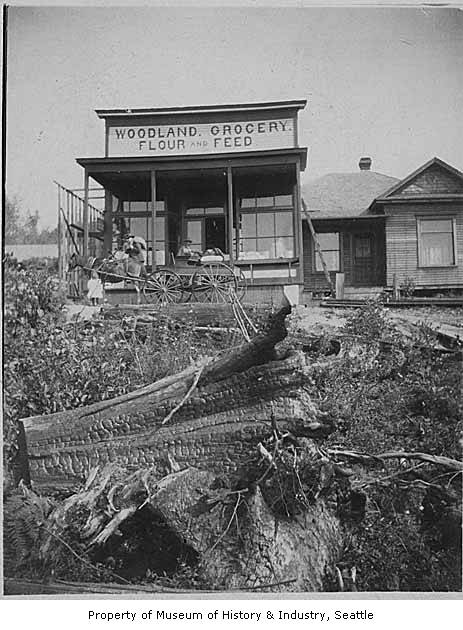
Around 1905, 60th & 4th Ave NW was the location of one of the earliest shops in the area (MOHI via U Washington) (Vintage West Woodland). Today it is a single family’s home, and a shop would be illegal by modern zoning laws—unless people demand the freedom they lost back.
Upzoning benefits you
If you live or work here, upzoning benefits you: Two parts to upzoning: increased residential density and mixed-use. There are many reasons why you should support upzoning regardless of whether you’re a property owner in Frelard, a renter, or a prospective resident. Greater density means more affordable housing and greater economic viability for new small businesses. Mixed-use zoning means flexibly for mixing residential, commercial, or industrial uses. As of January 2026, Seattle allows mixed-use in residential neighborhoods (Your Seattle neighborhood might be getting a corner store or cafe, Secret Seattle). Zoning laws restricts what you can and can’t do, but it wasn’t always this way, nor is it the norm around the world (Mixed use by default: How the Europeans (don’t) zone, Journal of Planning Literature).
For property owners: Your property value will increase. Research suggest that single-family home values increase 3-5% more if they’re upzoned (Upzoning and single-family housing prices, Journal of the American Planning Association). The boost comes from the increased development potential and flexibility that upzoning provides for your property. Upzoning gives you the right to:
Develop apartments for sale
Build rental units for passive rental income
Lease space for commercial-use (a mixed-use property)
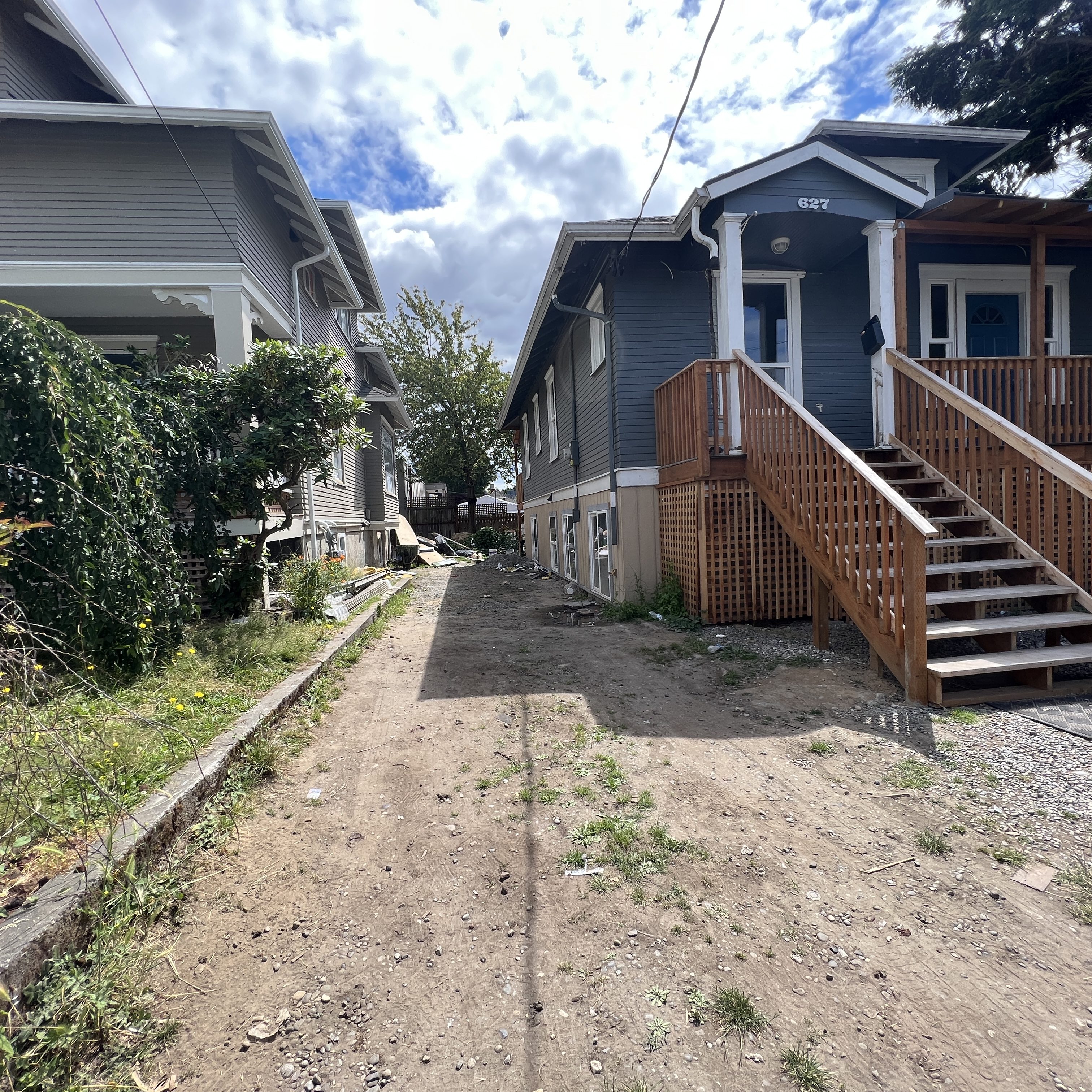
NW 41st St & Leary Way NW. This development fits two more families instead of just one because of its zoning. The lot behind, however, couldn’t build like this. And yet one step away it’s possible again—plus a cafe or shop since it’s zoned for mixed-use. Zoning in Frelard is currently haphazard.
It creates a more stable tax base by dividing the cost of maintaining infrastructure across more people (How cities taxed their way into the housing crisis, About Here). Maintaining roads and public services (e.g., libraries, schools, parks) are cheaper for each household when more people live closer together.
For the sake of others: Each year the population grows everywhere. Especially here in Seattle because of its natural beauty and mighty employers. Upzoning helps to increase the supply of housing, which helps moderate rent increases and prevents displacement of existing residents (How the US made affordable homes illegal, Vox). When neighborhoods can’t add housing despite job growth, that’s when more tents and encampments emerge. It’s because Seattle attracts highly educated talent from around the world who compete for limited housing. With higher incomes, they outcompete local residents. Even if you own your home, you’re affected by rising property taxes, insurance costs, and cost of living adjustments for wages. Upzoning prevents homelessness by addressing it’s number one root cause: a lack of housing (Homelessness is a Housing Problem).
69% agree that the city needs to make it easier and faster to build more housing.
65% agree that building more housing will slow down increasing costs
57% welcome upzoning, even if it means fewer single-family homes
54% say their quality of life is getting worse
Economic vitality for local businesses: Mixed-use development creates more foot traffic and customers for local businesses. Ground-floor retail with housing above means a steadier customer base. This is especially important for creative businesses, cafes, and neighborhood services that rely on local foot traffic. (Why Japan looks the way it does: Zoning, Life Where I’m From)
UPDATE: Jan 2026, legal commerce returns to residential zones!
Thanks to city council, Frelard’s future grows more vibrant. If your lot was previously relegated to residential-use only, congratulations—you now have greater freedom. Permitted commercial activities include: food processing, craft work, sales, services, and restaurants. Restrictions: maximum of 2,500 square feet on the ground or below-ground floor of a structure; outdoor food sales or service prohibited within 50 feet of a neighboring lot; drive-ins prohibited; hours limited to 6am to 10pm. (City Council Bill 120993 Chapter 23.44 PDF)
NW 49th St. near 9th Ave NW. Yonder, a popular local cider company, was forced to relocate out of a Greenwood garage due to restrictive zoning. They’re now in Frelard’s MML zone, an area that restricts housing (Unleash Seattle’s new industrial zones, Urbanist). This means an added expense for a new business (as opposed to operating from your home’s garage) and limited nearby customers (many would have to drive). (Greenwood’s Yonder bar closing due to neighbor complaint, My Ballard)
Environmental benefits: More housing near jobs and transit reduces car dependency, commute time, and traffic (This is why there’s so much “traffic,” Streetcraft Shorts). Compact development preserves green space elsewhere and reduces per-capita infrastructure costs.
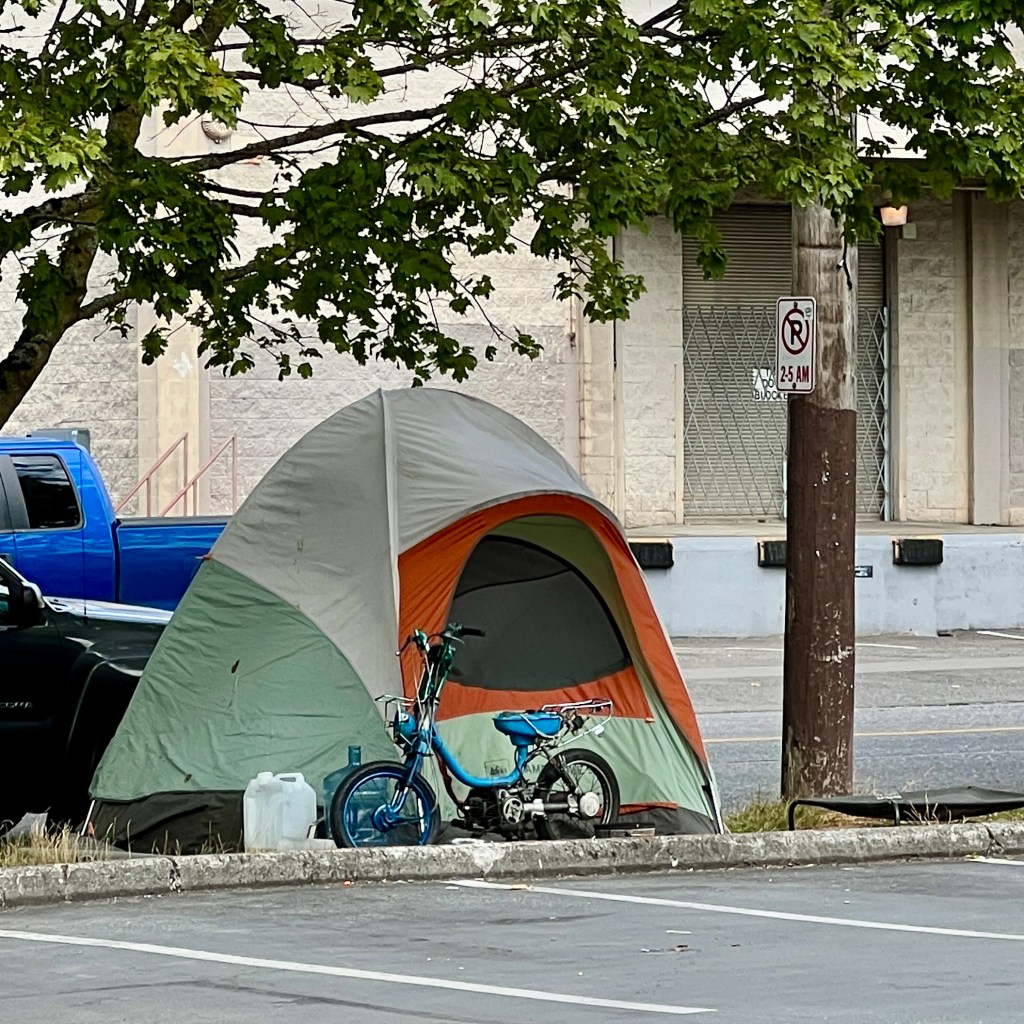
NW Leary Way & 11th Ave NW. Industrial zones supposedly protects blue-collar jobs, but it’s not true. This used to be a Jack in the Box and 7-Elevengas station. Industrial MML zoning prohibits development of apartments with a cafe below. What do we get instead? A drive-thru Starbucks with a parking lot surrounded by tents. (Starbucks claims Ballard vacant site, Daily Journal of Commerce).
Safety through activity Denser and mix-use zones tend to have more “eyes on the street” throughout the day – people walking to work, coming home, visiting local businesses. The activity creates safer, more vibrant public spaces than single-use zones that empty out at certain times (Associations of ‘Eyes on the Street’ with the perception of safety in New York city, Columbia).
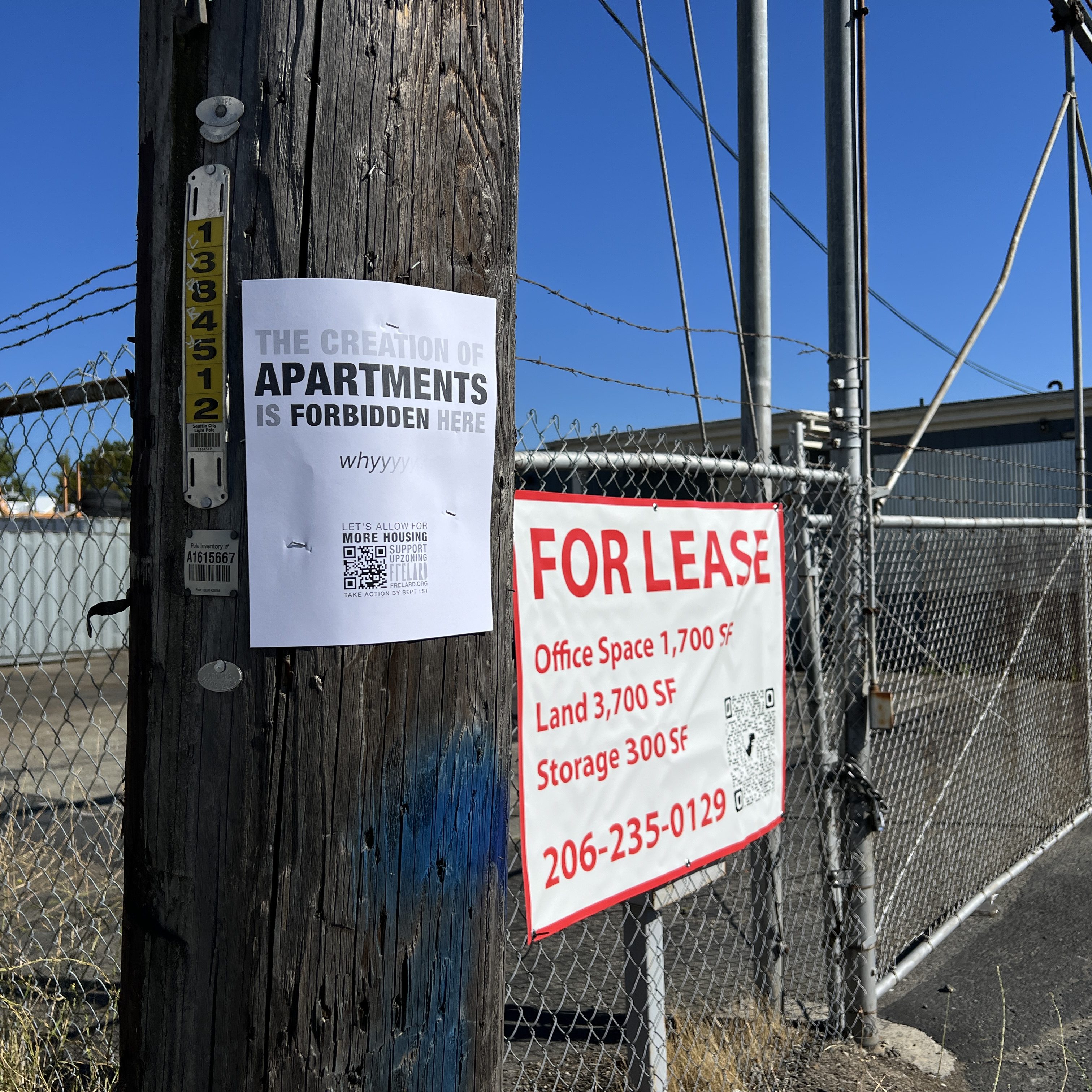
Walk around the “industrial” zone and you’ll see many For Lease signs, vacancy, and nearby tents. Why can’t more housing be built here, yet we allow self-storage and drive-thrus?
Address the root cause of Homelessness Housing scarcity drives up costs across the income spectrum. Higher-income residents compete for housing, pushing out lower-income residents who may then face homelessness. This is a clear pattern you can read more about in the book: “Homelessness is a housing problem” by Gregg Colburn and Clayton Page Aldern.
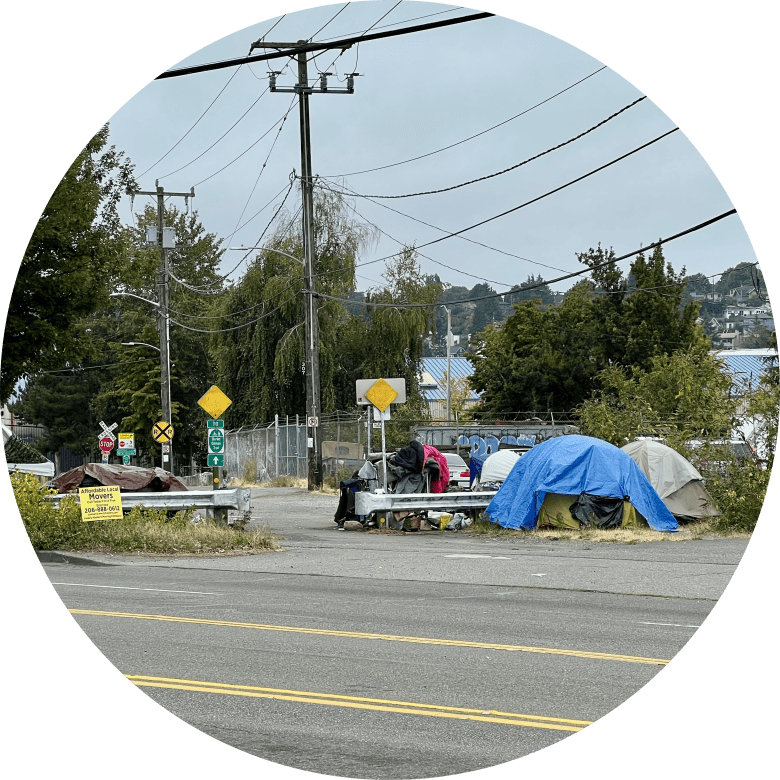
Some Frelard residents have no choice but nest in small plastic tents designed for leisure, not for long-term shelter.
Support a local workforce People should be able to live near where they work, especially essential workers (teachers, medical practitioners). Also, having a shorter commute means better mental health and job satisfaction (How commuting affects subjective wellbeing, Transportation). Upzoning helps ensure more people can afford to live happily locally.
Leary Way NW, between NW 45th St. and NW 43rd St. Fred Meyer, a grocery store, sits within MML zoning that does not allow for new residential and is exempt from MHA (mandatory housing affordability) requirements. Why do we forbid housing here? Meanwhile Fred Meyer struggles to staff employees—no surprise considering how expensive it is to live in Frelard.
Belltown & SLU did it, why not Frelard? While 2 out of 5 people in Seattle are low-income, only 1 in 5 newly built homes are affordable to them and their families (Seattle City Council Introduces New Affordable Housing Policy Options, Puget Sound Sage). This stark gap demonstrates why increasing supply through upzoning is crucial. South Lake Union and Belltown transformed from industrial/commercial areas into thriving mixed-use neighborhoods that retained affordability through the MHA (mandatory housing affordability) program, Frelard could do the same over the next few decades if we advocate for it.
Market power (manipulation of supply v. demand) means higher profit margins for lower-quality housing, such as apartments in old buildings (New housing slows rent growth most for older, more affordable units, Pew). In other words: zoning restrictions inflate prices, regardless of its quality, when options are limited.
Small developers, such as homeowners, however, will construct additional housing for reasons aside from profit, such as housing friends and family (Transforming homeowners into landlords, UCLA). This can lead to overbuilding.
N 39th St, near Evanston Ave N. View of construction expanding an apartment building. Upzoning would create more pressure on developers to build bigger and higher quality apartments for lower prices.
Upzone for social justice
Upzoning is justice! Did you know that Seattle has a history of prejudice against people-of-color and the poor when it came to housing policy? There’s no need to speculate why Frelard isn’t more diverse.
Historical Context: Native American tribes, like the Duwamish and Shilshole people, lived here before us. They invited early White settlers to live among them. Under their noses, the US and British empire debated the boundary of their territories, ignoring the sovereignty of the First People. For the US, the Pacific Northwest was first known as Oregon (The Oregon territory, US Office of the Historian).
In 1850, only White men were able to own land in the area—and it didn’t even cost them a penny (Oregon Donation Land Law, Oregon Encyclopedia). They began claiming ownership of the land under the homes of the First People. In 1855, just a couple years after this area became the “Washington” territory of the US, the First People were kicked out. Why? Because the growing White neighborhood didn’t want non-White neighbors.
In 1882, Chinese were banned from immigrating to Seattle. In 1917 all Asians were banned. It wasn’t until 1943 that the Chinese Exclusion Act was repealed and in 1952 the Asiatic Barred Zone Act was repealed. Again, the reason why Seattle’s majority is White today is due to explicitly racist policies. (Repeal of the Chinese Exclusion Act, US Historian) (Anti-asian laws and policies, US National Parks)
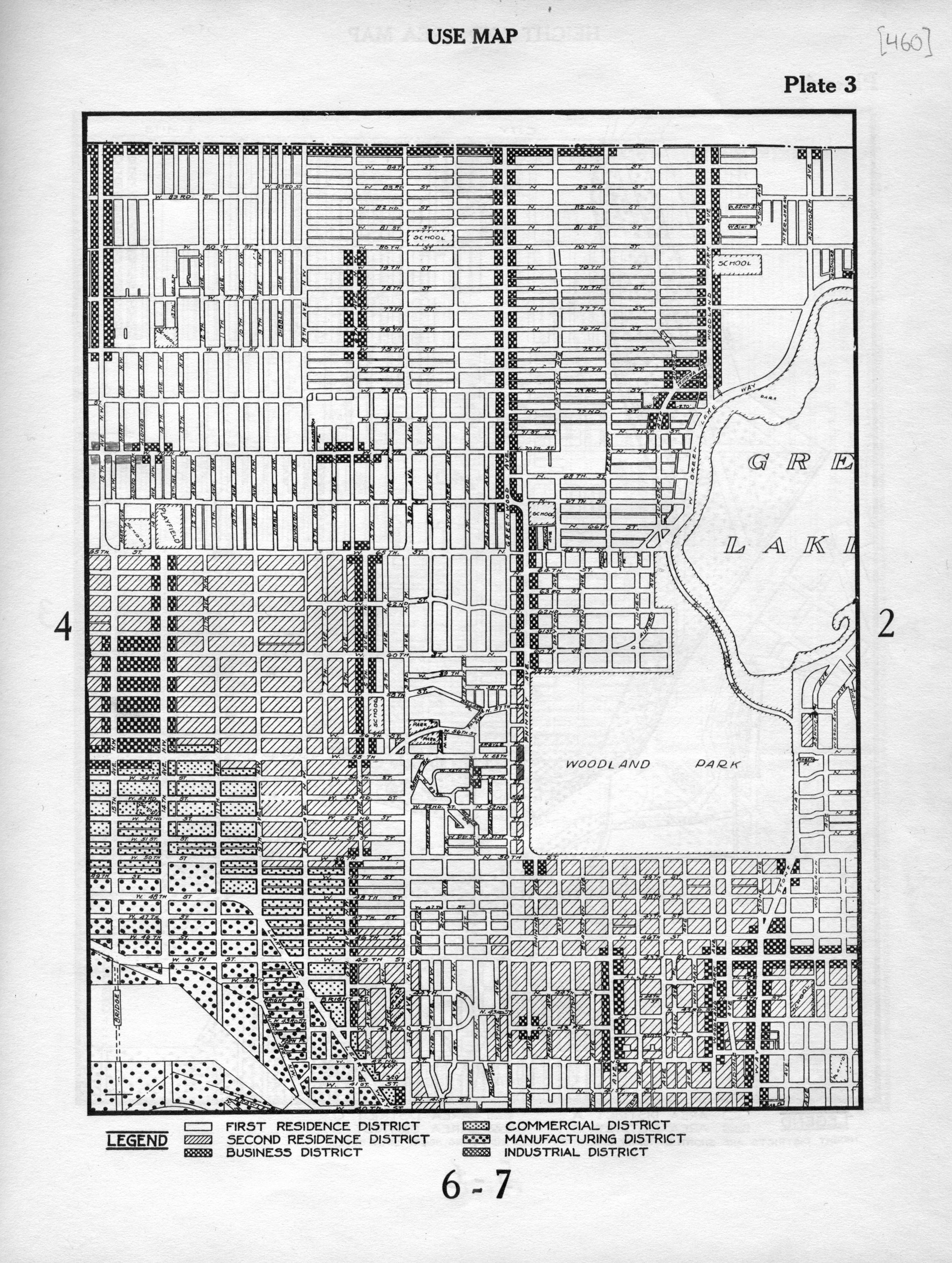
Meanwhile, in 1923, the introduction of zoning reinforced segregation by designating commercial areas based on the presence of minorities while limiting their housing options. (Seattle Zoning History, Medium). The Standard State Zoning Enabling Act (SZEA) was developed by the US Department of Commerce as a model for States to create their own zoning regulations (The white supremacist structure of American zoning law, Brooklyn Law Review). They were designed to maintain white wealth and exclude minorities from desirable neighborhoods. When the Supreme Court outlawed explicitly racial zoning in 1917, single-family zoning became the tool wealthy white homeowners used to block the development of affordable, higher-density housing that would have made neighborhoods accessible to racial minorities and working-class families (Racially restrictive covenant history, UW).
Today we live with this legacy. It’s well documented that the city used restrictive covenants from the 1920s to 1960s to bar non-whites from most neighborhoods (Extreme heat and the legacy of racist housing policies in Seattle, Urbanist). The creation of industrial zoning displaced working-class communities out of areas like Frelard. This was besides another tool to racially discriminate, via mortgage eligibility, known as “Redlining” (Redlining, Racial Covenants, and Housing Discrimination in Seattle, HistoryLink.org). Today’s zoning laws perpetuate a racist legacy by continuing to exclude affordable housing from wealthy areas. Upzoning, for some, is not just a matter of basic economics, but also social justice.
Seattle wasn’t the progressive beacon it is today. In 1964 Seattleites voted against fair housing 2:1 (Seattle’s ugly past: Segregation in our neighborhoods, Seattle Mag). It wasn’t until the Federal Fair Housing Act in 1968 that racial minorities in Seattle earned a bit more freedom (The 1964 open housing election, UW). Sometimes we forget that civil rights wasn’t that long ago; just about 60 years ago. Meanwhile here we’re contemplating if Frelard will continue its restrictions for another 20 years.
Frelard’s location between Fremont and Ballard with upzoning, would create greater access to good public schools, transit, jobs, and amenities—historically denied to communities of color.
Denser development reduces sprawl (developing wilderness into suburban housing) and car dependency—addressing environmental burdens that disproportionately affect low-income communities and communities of color.
Allows more people to live near bus stops, such as the 40 or 28X on Leary Way NW— reducing the burden of transportation costs for lower income households.
Zoning wasn’t about preservation, it was a tool. Macefield’s “Up” home became zoned for industrial. One hundred years later and it’s still not being used for industrial. The first zoning in Frelard was in 1923 (Researching Historic Land Use and Zoning, Seattle.gov).
NW 44th St, near 8th Ave NW. MML (industrial) zoning binds existing residences from being able to expansively remodel. Leaving them small choices like, finishing an unfinished basement and restricts their property value. Why shouldn’t the homeowners on this block be able to build more apartments if they want to?
Continuing to support restrictive zoning isn’t neutral policy, it reinforces the inequality that was designed by prejudice and long absent politicians. If you’re interested to learn more, consider the 2017 book: ‘The color of law: A Forgotten History of How Our Government Segregated America’ by Richard Rothstein (Economic Policy Institute). Let’s fix zoning in Frelard!
Upzone to saves trees
Densification can preserve more trees than sprawl. Densification is when more homes are built in places where people already live. Sprawl is when new neighborhoods are created by converting forests, farmland, and natural areas. Sprawl requires new roads, utilities, and infrastructure to be built and involves longer commutes—it’s expensive.
Seattle needs to house more residents every year. The question is whether we grow by building density in places like Frelard, or sprawl into the wilderness on the outskirts of the city. In other-words, loose the lawn within the city or convert more wilderness into lawns? Think about it, every new apartment building in Frelard, could mean one less suburban subdivision. It makes sense that single family homes in Seattle have historically been the primary threat to the state’s tree canopy (Twenty-five years of sprawl in the Seattle region: growth management responses and implications for conservation, Landscape and Urban Planning).
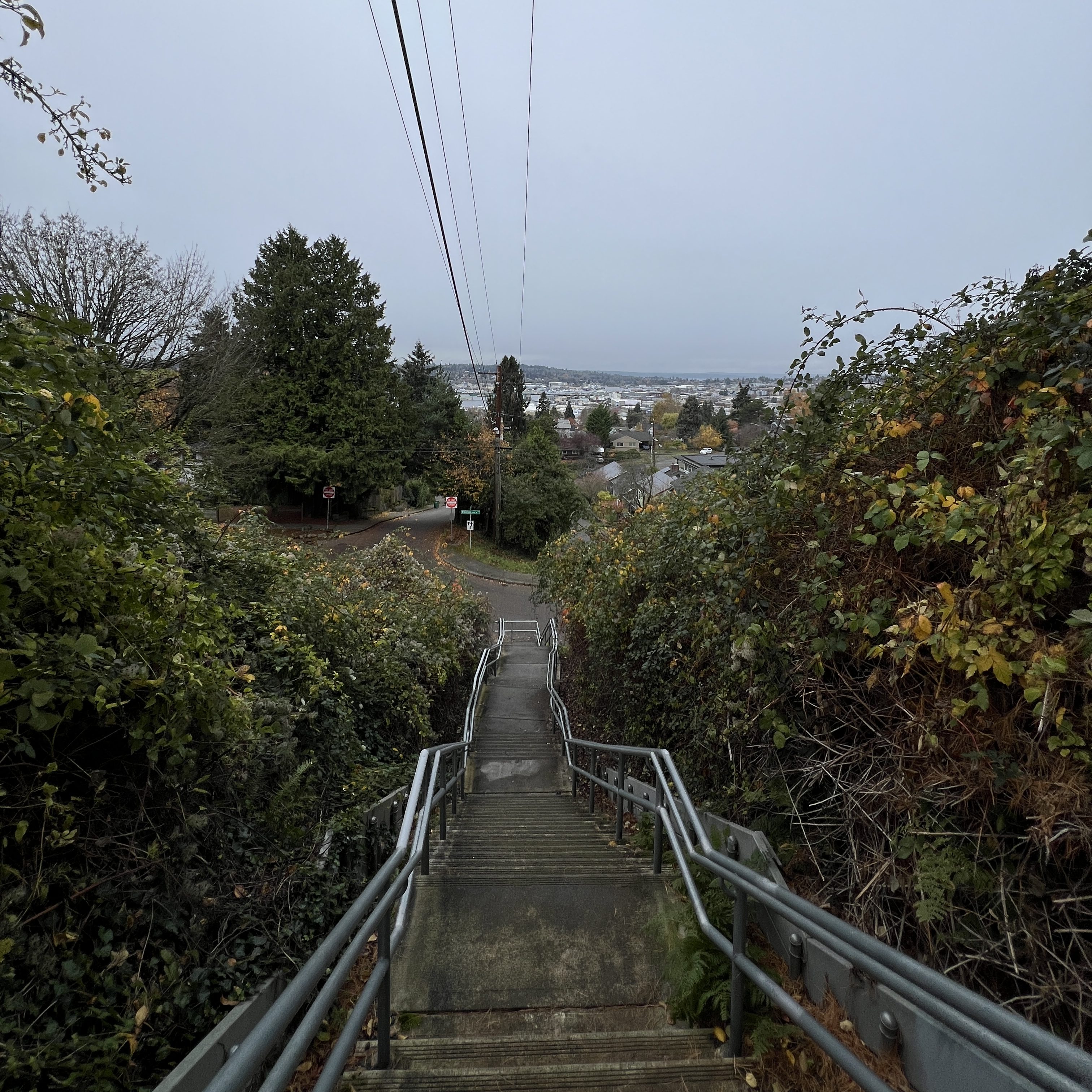
Staircase connecting Palantine Ave N & Greenwood Ave N, near N 43rd St. It’s possible to increase housing and tree density by incentivizing property owners to plant trees. Housing and tree-hugging are not opposing agendas.
Do you realize how close Frelard is to the water? Today Frelard is largely zoned as an industrial waterfront along the Ship Canal from Portage Bay to the Shilshole area of Ballard (Seattle’s Frelard Straddles the Lines of Industrial, Residential and Commercial, Seattle magazine). A big portion zoned exclusively for industrial-use is blocking our enjoyment of the nearby waterfront for no good reason. It may have been reasonable a hundred years ago—bustling maritime services, manufacturers transporting cargo, employers of many local residents—but it doesn’t today. The reality here is vacant lots, “For Lease” signs, and homeless encampments ironically next to empty buildings. Upzoning for mixed-use would acknowledge contemporary industries; create housing, jobs, and bolster funding for social services (Industrial Rezoning in US Cities, Manhattan Institute).
Across Leary Way NW, near small businesses and homes, is endemic vacancy. Why not allow industrial-mixed in Frelard?
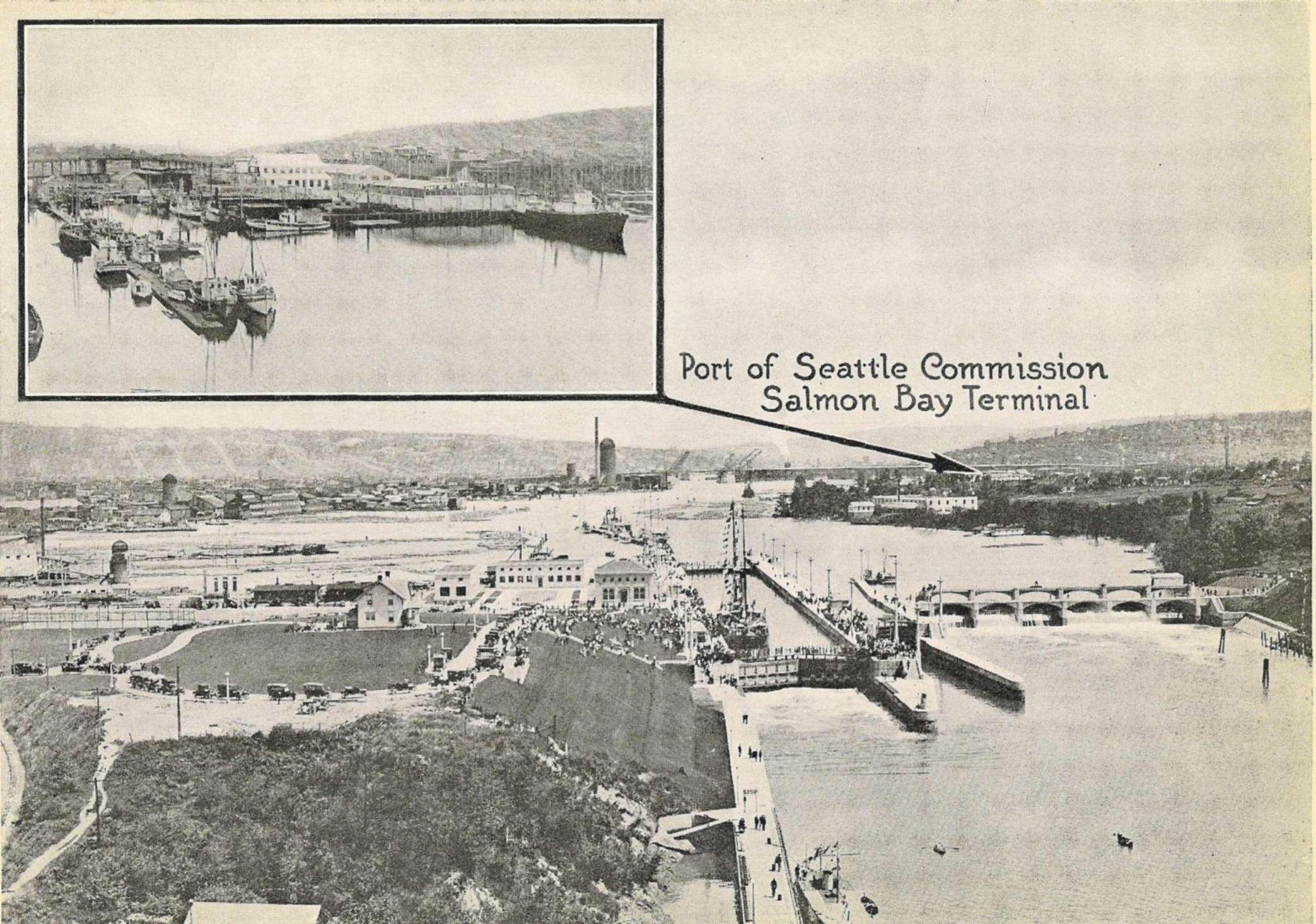
1919 photograph of Frelard (source wikimedia). See Gasworks at the center in the distance? Fremont is just to its left and the nearer large undeveloped wet area is Ballard. A lot has changed in a hundred years; why not free our potential to keep changing?
What are we waiting for? A lot of valuable land in Frelard has long been reserved for a fanciful industrial manufacturing renaissance. The land was largely a tidal zone before the Ballard Locks was built around 1917 (Working Waterfronts, Maritime Washington). A few years later, it was reserved for industrial-use only, but little did city planners know that the Industrial Revolution—as they knew it—was ending (Industrial Revolution, History). Walk around and you’ll find homes in industrial zones, built before zoning laws, never displaced by hungry industrialist. Rather, industrial entities have been slowly moving out. In 1991 Salmon Bay Steel closed after 29 years of operation (Salmon Bay Steel Kent, WA.gov). The site deemed too expensive and small to attract new Heavy-Industry companies and so our dear Fred Meyer grocery store was permitted (Plot thickens as Fred Meyer seeks to build store, Seattle Times). Just across the water, Ocean Beauty Seafoods cannery moved in 2018, after a hundred years of operation, citing improved logistics in Renton (Seattle and its relationship with industrial land, UW). In that place is a new space for a creative economy (West Canal Yards, Arcade NW). The likes of which could easily house more residents, if only zoning laws didn’t get in the way for no good reason. Today’s industries didn’t exist or operate like those a century ago. It’s time we embrace a contemporary understanding and update laws so Frelard can thrive!
Parts of Frelard used to be a tideflats, so it isn’t surprising that many areas are considered liquefaction prone today (pink areas on the map). Safe development requires technology developed in the past century (Reinforcing the ground beneath our feet, UW)
Like Frelard, Williamsburg in New York had a declining need for industrial land post WWII and the advent of containerization, so they upzoned in 2003 (Up-zoning New York City’s mixed-use neighborhoods, Journal of Planning Education and Research). Above is a picture from 2022 of a vibrant pizza restaurant. Below (Google) is the same spot ten years prior. Imagine how much more vibrant Frelard could be in a few decades!
Upzoning Frelard doesn’t necessitate exterminating industry. Baltimore, for example, created “Industrial Mixed-Use” zoning in 2017. Their policy reserves at least 50% of any ground floor for industrial-use and ensures environmental cleanup (Mixed-use zoning, Sustainable Development Code). Modern technology makes it feasible to operate clean industrial businesses alongside residences. Consider Nordhavn in Denmark, Hamburg’s HafenCity, or Amsterdam’s Eastern Docklands—there are many examples of how boat repair shops and living rooms can coexist on the same block or even in the same building. With the right policy for Frelard, allowing quality residential development near industry is possible.
Some Frelard residents already live like its Industrial Mixed-Use zoned (2017, Port of Seattle). However, current zoning prevents homeowners from adding dwelling units, and developers from turning vacant lots into vibrant mixed-use places.
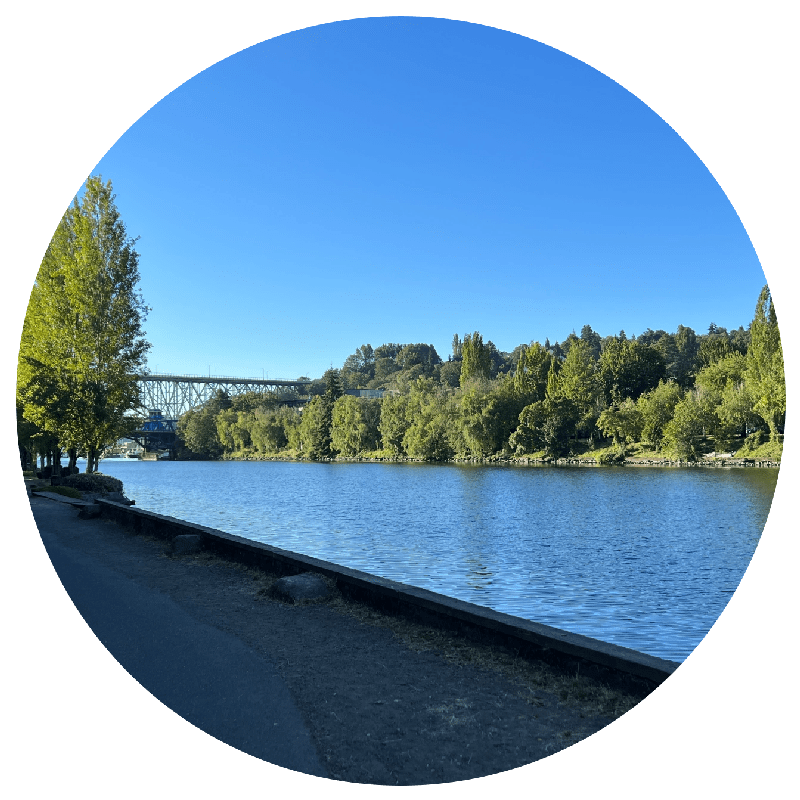
Shilshole Ave NW & NW 45th St. Upzoning could mean workers and residents of Frelard could share the waterfront.
Watch and learn
Rather watch a video than read? The videos below tell stories about, or related to, upzoning. Listen and learn from others about problems regarding homelessness, housing affordability, climate change, quality-of-life, etc.
This website pulls together decades of research and journalism for your consideration. Motivated by a desire for progress in our community, here is the product of funneled energy and the belief that upzoning Frelard is a path towards a more sustainable and equitable future. We are:
YIMBYs (yes in my back yard)
Your neighbors
Homeowners
Renters
Frelard residents
Seattleites
– Friends of Frelard
Ready to support upzoning Frelard? It just takes a minute to send a short message and we’ve prepared an ad-lib to make it easy:















 Upzone Frelard