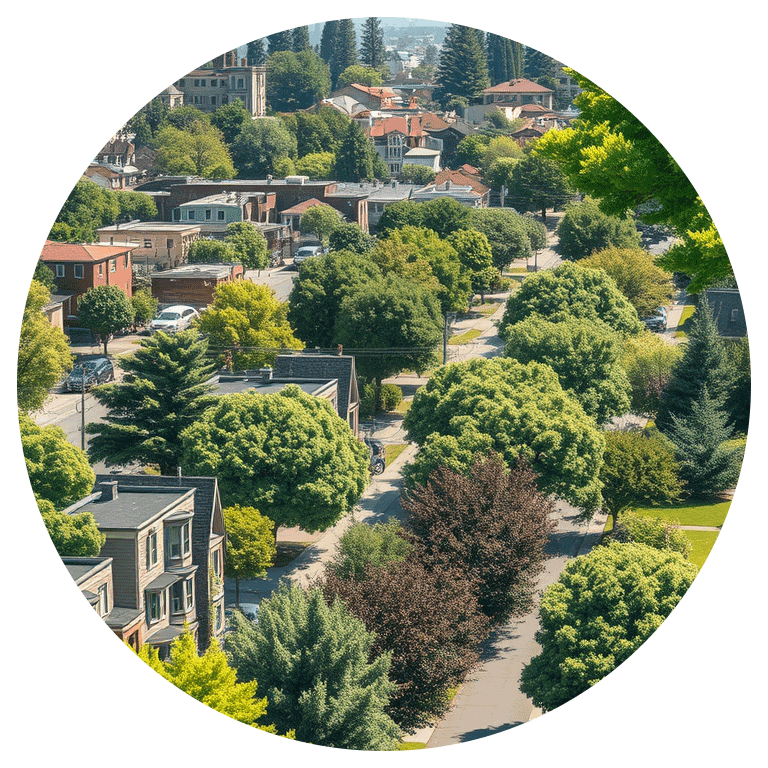
Upzone to saves trees
Densification can preserve more trees than sprawl. Densification is when more homes are built in places where people already live. Sprawl is when new neighborhoods are created by converting forests, farmland, and natural areas. Sprawl requires new roads, utilities, and infrastructure to be built and involves longer commutes—it’s expensive.
Seattle needs to house more residents every year. The question is whether we grow by building density in places like Frelard, or sprawl into the wilderness on the outskirts of the city. In other-words, loose the lawn within the city or convert more wilderness into lawns? Think about it, every new apartment building in Frelard, could mean one less suburban subdivision. It makes sense that single family homes in Seattle have historically been the primary threat to the state’s tree canopy (Twenty-five years of sprawl in the Seattle region: growth management responses and implications for conservation, Landscape and Urban Planning).
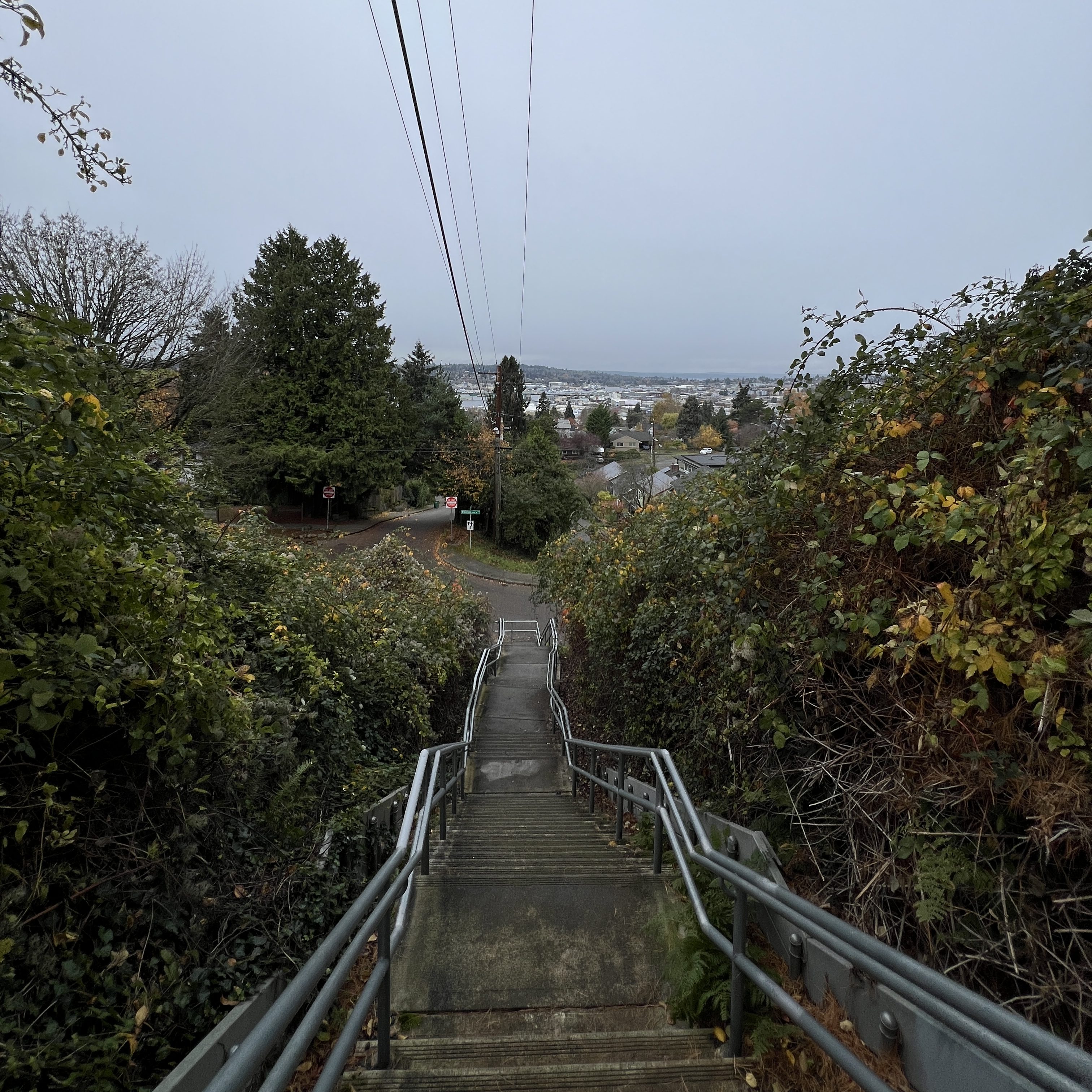
Staircase connecting Palantine Ave N & Greenwood Ave N, near N 43rd St. It’s possible to increase housing and tree density by incentivizing property owners to plant trees. Housing and tree-hugging are not opposing agendas.
Dense areas are not necessarily less green (Modeling the shading effect of Vancouver’s urban tree canopy in relation to neighborhood bariations, Arboriculture & Urban Forestry) and when we accommodate growth through infill rather than suburban sprawl, we protect far more forested land overall. Every duplex or townhome in Frelard prevents the clear-cutting of acres for suburban development.
Densification doesn’t have to mean bulldozing every tree. Seattle’s tree ordinance contained a formula that favored tree removal in past development projects (Seattle’s new zoning rules dial up tension around preserving tree canopy, KUOW NPR), but it’s being improved. Under refined ordinance, the city aims to add tree protections while making room for more housing (New Tree Protection Ordinance Goes into Effect on July 30, Seattle.gov).
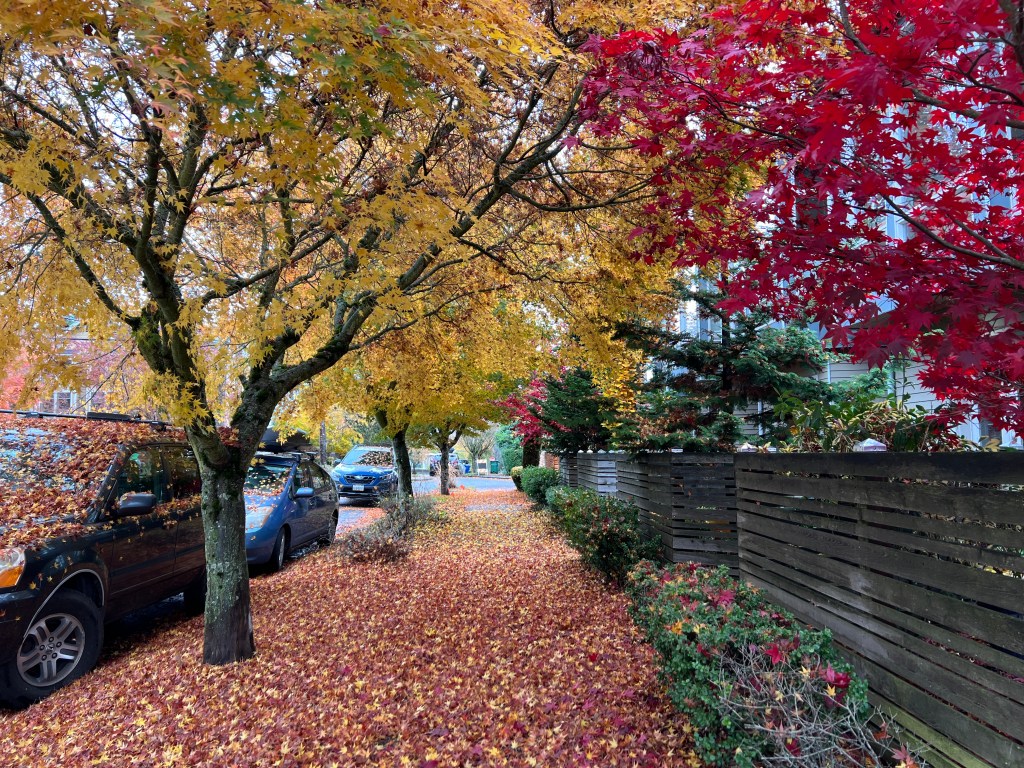
N 42nd St, near Fremont Ave N. A beautiful tree canopy in a higher-density zone. Proof that trees can and should be preserved in upzoned areas.
Mixed-use upzoning could promote more tree-lined streets. Businesses in neighborhoods, like cafes and restaurants, value the aesthetic of keeping trees. Trees persuade customers to visit cafes and boost their sales (Impact of the built environment on coffee shops, UNC). Trees and mixed-use upzoning increase a neighborhood’s walkability and decrease traffic pollution. Walkable neighborhoods with trees also tend to be safer (Does tree canopy moderate the association between neighborhood walkability and street crime?, Urban Forestry & Urban Greening). Upzoning Frelard with trees could bring a safer car-free lifestyle within more comfortable reach for more residents.
 Upzone Frelard