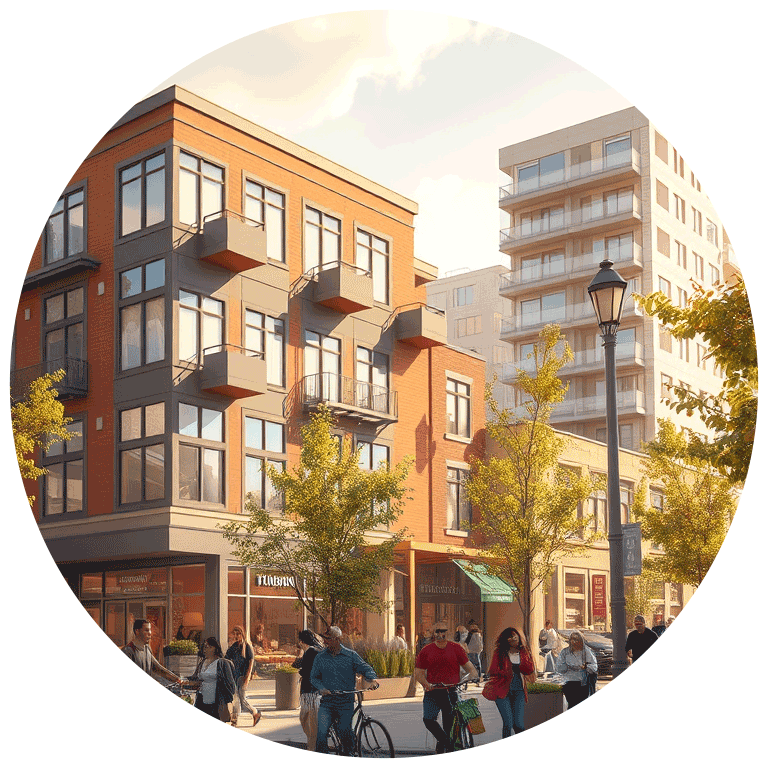
Upzoning fosters healthy communities
For the sake of others: Each year the population grows everywhere. Especially here in Seattle because of its natural beauty and mighty employers. Upzoning helps to increase the supply of housing, which helps moderate rent increases and prevents displacement of existing residents (How the US made affordable homes illegal, Vox). When neighborhoods can’t add housing despite job growth, that’s when more tents and encampments emerge. It’s because Seattle attracts highly educated talent from around the world who compete for limited housing. With higher incomes, they outcompete local residents. Even if you own your home, you’re affected by rising property taxes, insurance costs, and cost of living adjustments for wages. Upzoning prevents homelessness by addressing it’s number one root cause: a lack of housing (Homelessness is a Housing Problem).
North Seattleites (April 2025 Index PDF, Seattle Metro Chamber)
- 41% say homelessness is their top concern
- 69% agree that the city needs to make it easier and faster to build more housing.
- 65% agree that building more housing will slow down increasing costs
- 57% welcome upzoning, even if it means fewer single-family homes
- 54% say their quality of life is getting worse
Economic vitality for local businesses: Mixed-use development creates more foot traffic and customers for local businesses. Ground-floor retail with housing above means a steadier customer base. This is especially important for creative businesses, cafes, and neighborhood services that rely on local foot traffic. (Why Japan looks the way it does: Zoning, Life Where I’m From)
UPDATE : Jan 2026, legal commerce returns to residential zones!
Thanks to city council, Frelard’s future grows more vibrant. If your lot was previously relegated to residential-use only, congratulations—you now have greater freedom. Permitted commercial activities include: food processing, craft work, sales, services, and restaurants. Restrictions: maximum of 2,500 square feet on the ground or below-ground floor of a structure; outdoor food sales or service prohibited within 50 feet of a neighboring lot; drive-ins prohibited; hours limited to 6am to 10pm. (City Council Bill 120993 Chapter 23.44 PDF)

NW 49th St. near 9th Ave NW. Yonder, a popular local cider company, was forced to relocate out of a Greenwood garage due to restrictive zoning. They’re now in Frelard’s MML zone, an area that restricts housing (Unleash Seattle’s new industrial zones, Urbanist). This means an added expense for a new business (as opposed to operating from your home’s garage) and limited nearby customers (many would have to drive). (Greenwood’s Yonder bar closing due to neighbor complaint, My Ballard)
Environmental benefits: More housing near jobs and transit reduces car dependency, commute time, and traffic (This is why there’s so much “traffic,” Streetcraft Shorts). Compact development preserves green space elsewhere and reduces per-capita infrastructure costs.
NW Leary Way & 11th Ave NW. Industrial zones supposedly protects blue-collar jobs, but it’s not true. This used to be a Jack in the Box and 7-Eleven gas station. Industrial MML zoning prohibits development of apartments with a cafe below. What do we get instead? A drive-thru Starbucks with a parking lot surrounded by tents. (Starbucks claims Ballard vacant site, Daily Journal of Commerce).

Safety through activity Denser and mix-use zones tend to have more “eyes on the street” throughout the day – people walking to work, coming home, visiting local businesses. The activity creates safer, more vibrant public spaces than single-use zones that empty out at certain times (Associations of ‘Eyes on the Street’ with the perception of safety in New York city, Columbia).
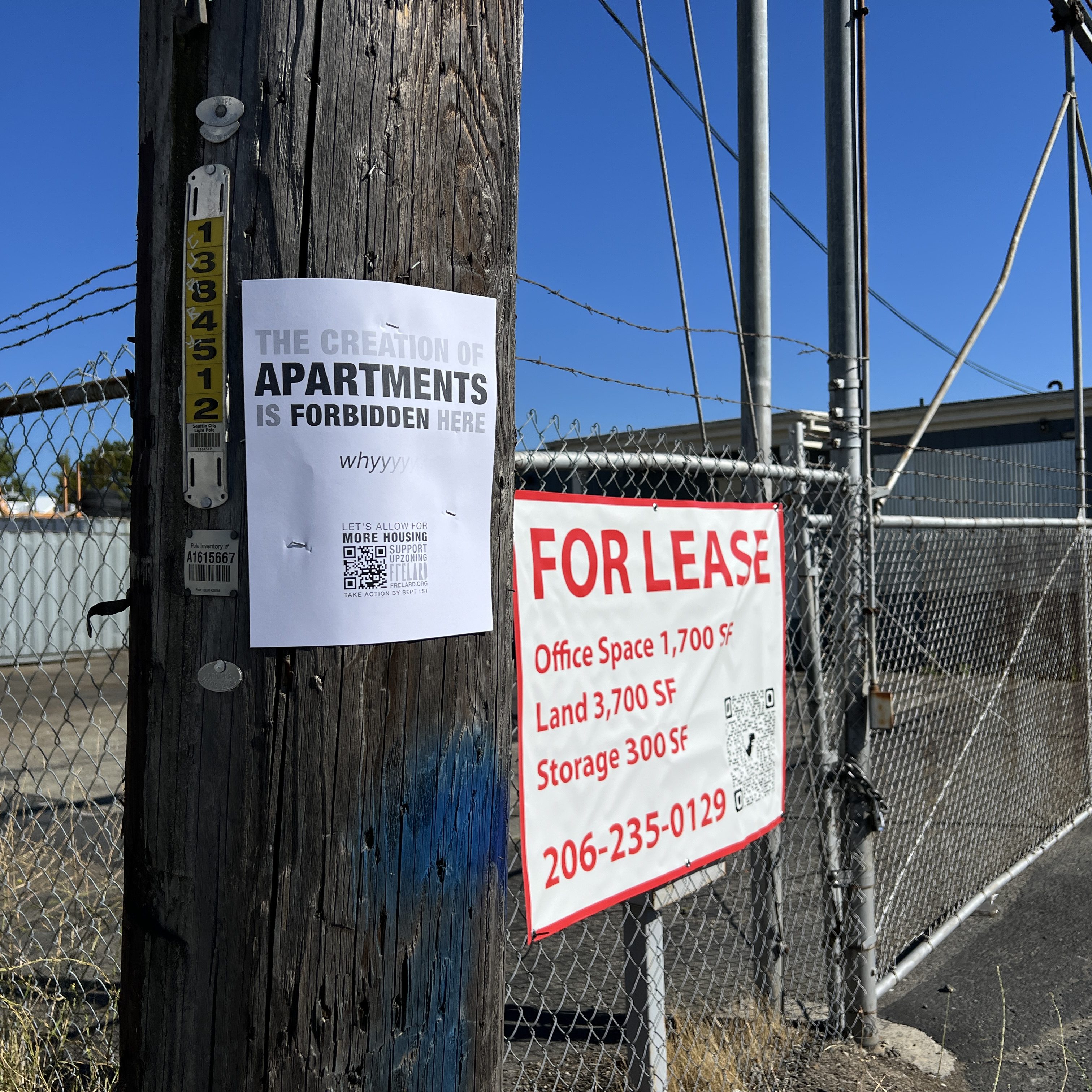
Walk around the “industrial” zone and you’ll see many For Lease signs, vacancy, and nearby tents. Why can’t more housing be built here, yet we allow self-storage and drive-thrus?
Address the root cause of Homelessness Housing scarcity drives up costs across the income spectrum. Higher-income residents compete for housing, pushing out lower-income residents who may then face homelessness. This is a clear pattern you can read more about in the book: “Homelessness is a housing problem” by Gregg Colburn and Clayton Page Aldern.
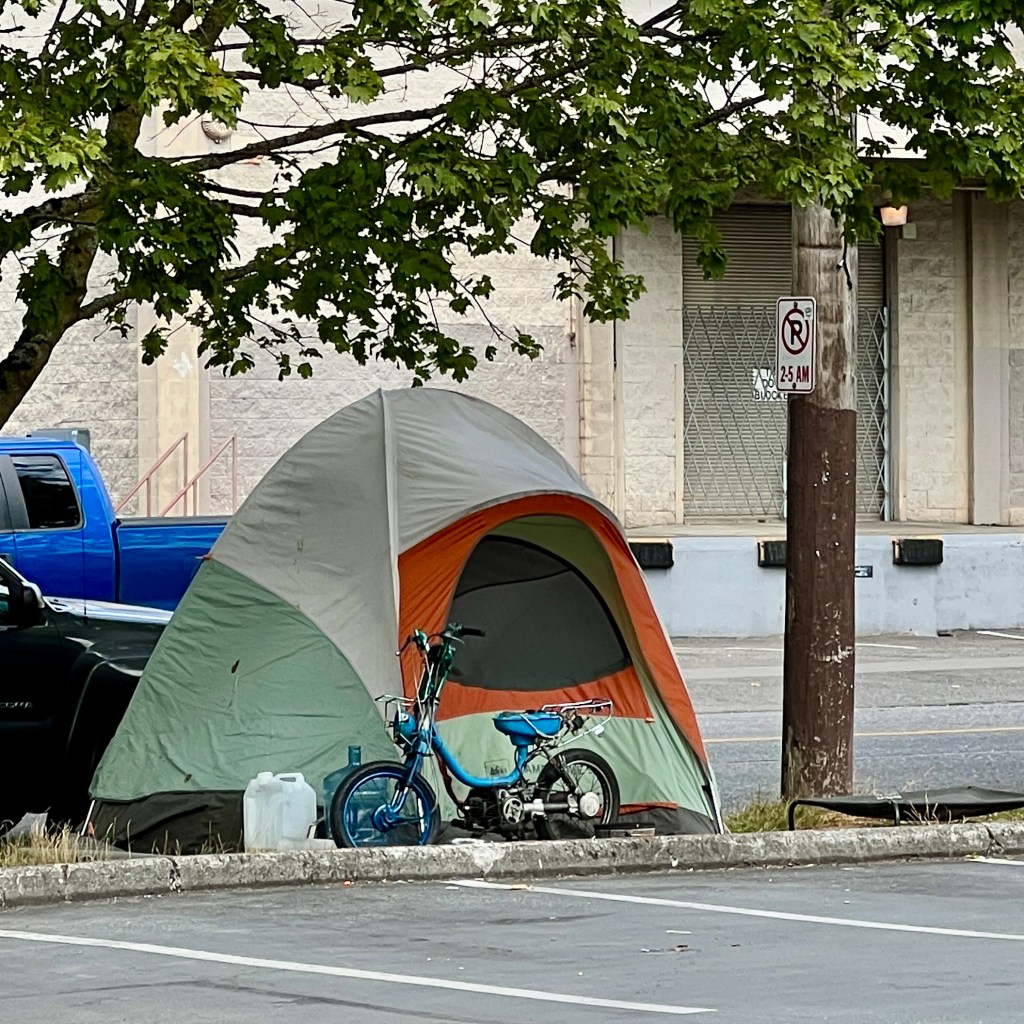
Some Frelard residents have no choice but nest in small plastic tents designed for leisure, not for long-term shelter.
Support a local workforce People should be able to live near where they work, especially essential workers (teachers, medical practitioners). Also, having a shorter commute means better mental health and job satisfaction (How commuting affects subjective wellbeing, Transportation). Upzoning helps ensure more people can afford to live happily locally.
Leary Way NW, between NW 45th St. and NW 43rd St. Fred Meyer, a grocery store, sits within MML zoning that does not allow for new residential and is exempt from MHA (mandatory housing affordability) requirements. Why do we forbid housing here? Meanwhile Fred Meyer struggles to staff employees—no surprise considering how expensive it is to live in Frelard.

Belltown & SLU did it, why not Frelard? While 2 out of 5 people in Seattle are low-income, only 1 in 5 newly built homes are affordable to them and their families (Seattle City Council Introduces New Affordable Housing Policy Options, Puget Sound Sage). This stark gap demonstrates why increasing supply through upzoning is crucial. South Lake Union and Belltown transformed from industrial/commercial areas into thriving mixed-use neighborhoods that retained affordability through the MHA (mandatory housing affordability) program, Frelard could do the same over the next few decades if we advocate for it.
 Upzone Frelard