
Upzone for social justice
Upzoning is justice! Did you know that Seattle has a history of prejudice against people-of-color and the poor when it came to housing policy? There’s no need to speculate why Frelard isn’t more diverse.
Historical Context: Native American tribes, like the Duwamish and Shilshole people, lived here before us. They invited early White settlers to live among them. Under their noses, the US and British empire debated the boundary of their territories, ignoring the sovereignty of the First People. For the US, the Pacific Northwest was first known as Oregon (The Oregon territory, US Office of the Historian).
In 1850, only White men were able to own land in the area—and it didn’t even cost them a penny (Oregon Donation Land Law, Oregon Encyclopedia). They began claiming ownership of the land under the homes of the First People. In 1855, just a couple years after this area became the “Washington” territory of the US, the First People were kicked out. Why? Because the growing White neighborhood didn’t want non-White neighbors.
In 1882, Chinese were banned from immigrating to Seattle. In 1917 all Asians were banned. It wasn’t until 1943 that the Chinese Exclusion Act was repealed and in 1952 the Asiatic Barred Zone Act was repealed. Again, the reason why Seattle’s majority is White today is due to explicitly racist policies. (Repeal of the Chinese Exclusion Act, US Historian) (Anti-asian laws and policies, US National Parks)
In 1942, the first Japanese-Americans were interned in Seattle. Miller Freeman made this happen and then scooped up their land. The interned Japanese-Americans were released four years later, many having to start over. (How Bellevue businessmen who stroked fears benefited after Japanese American incarceration, Seattle Globalist) (So who is Miller Freeman anyways?, Densho)
Meanwhile, in 1923, the introduction of zoning reinforced segregation by designating commercial areas based on the presence of minorities while limiting their housing options. (Seattle Zoning History, Medium). The Standard State Zoning Enabling Act (SZEA) was developed by the US Department of Commerce as a model for States to create their own zoning regulations (The white supremacist structure of American zoning law, Brooklyn Law Review). They were designed to maintain white wealth and exclude minorities from desirable neighborhoods. When the Supreme Court outlawed explicitly racial zoning in 1917, single-family zoning became the tool wealthy white homeowners used to block the development of affordable, higher-density housing that would have made neighborhoods accessible to racial minorities and working-class families (Racially restrictive covenant history, UW).
Today we live with this legacy. It’s well documented that the city used restrictive covenants from the 1920s to 1960s to bar non-whites from most neighborhoods (Extreme heat and the legacy of racist housing policies in Seattle, Urbanist). The creation of industrial zoning displaced working-class communities out of areas like Frelard. This was besides another tool to racially discriminate, via mortgage eligibility, known as “Redlining” (Redlining, Racial Covenants, and Housing Discrimination in Seattle, HistoryLink.org). Today’s zoning laws perpetuate a racist legacy by continuing to exclude affordable housing from wealthy areas. Upzoning, for some, is not just a matter of basic economics, but also social justice.
Seattle wasn’t the progressive beacon it is today. In 1964 Seattleites voted against fair housing 2:1 (Seattle’s ugly past: Segregation in our neighborhoods, Seattle Mag). It wasn’t until the Federal Fair Housing Act in 1968 that racial minorities in Seattle earned a bit more freedom (The 1964 open housing election, UW). Sometimes we forget that civil rights wasn’t that long ago; just about 60 years ago. Meanwhile here we’re contemplating if Frelard will continue its restrictions for another 20 years.
Gist of how upzoning serves justice:
- Dismantles a policy designed to create racial segregation––advancing the civil rights goal of genuine integration. (Density Zoning and Class Segregation in U.S. Metropolitan Areas, Social Science Quarterly).
- Discourages gentrification; specifically, higher-income residents out-competing lower-income residents for housing while driving up rent prices (New housing slows rent growth most for older, more affordable units, Pew)
- Decreases involuntary displacement (In defense of the “gentrification building”, Vox)
- More housing supply helps address affordability crises—something that disproportionately impact communities of color in Seattle (Rental deserts, segregation, and zoning, Journal of Urban Affairs)
- Frelard’s location between Fremont and Ballard with upzoning, would create greater access to good public schools, transit, jobs, and amenities—historically denied to communities of color.
- Denser development reduces sprawl (developing wilderness into suburban housing) and car dependency—addressing environmental burdens that disproportionately affect low-income communities and communities of color.
- Allows more people to live near bus stops, such as the 40 or 28X on Leary Way NW— reducing the burden of transportation costs for lower income households.

NW 46th St, near the 15th Ave NW Ballard Bridge. The legendary holdout home of Edith Macefield (Holdout, 99% Invisible). Restrictive zoning pushed families out of the area and Edith didn’t want to move (Seattle’s ‘Up’ house and Edith Macefield: Read a Q&A about the Ballard landmark, Kiro7). Today this area is MML (industrial) zoned which means no new housing is allowed—why?
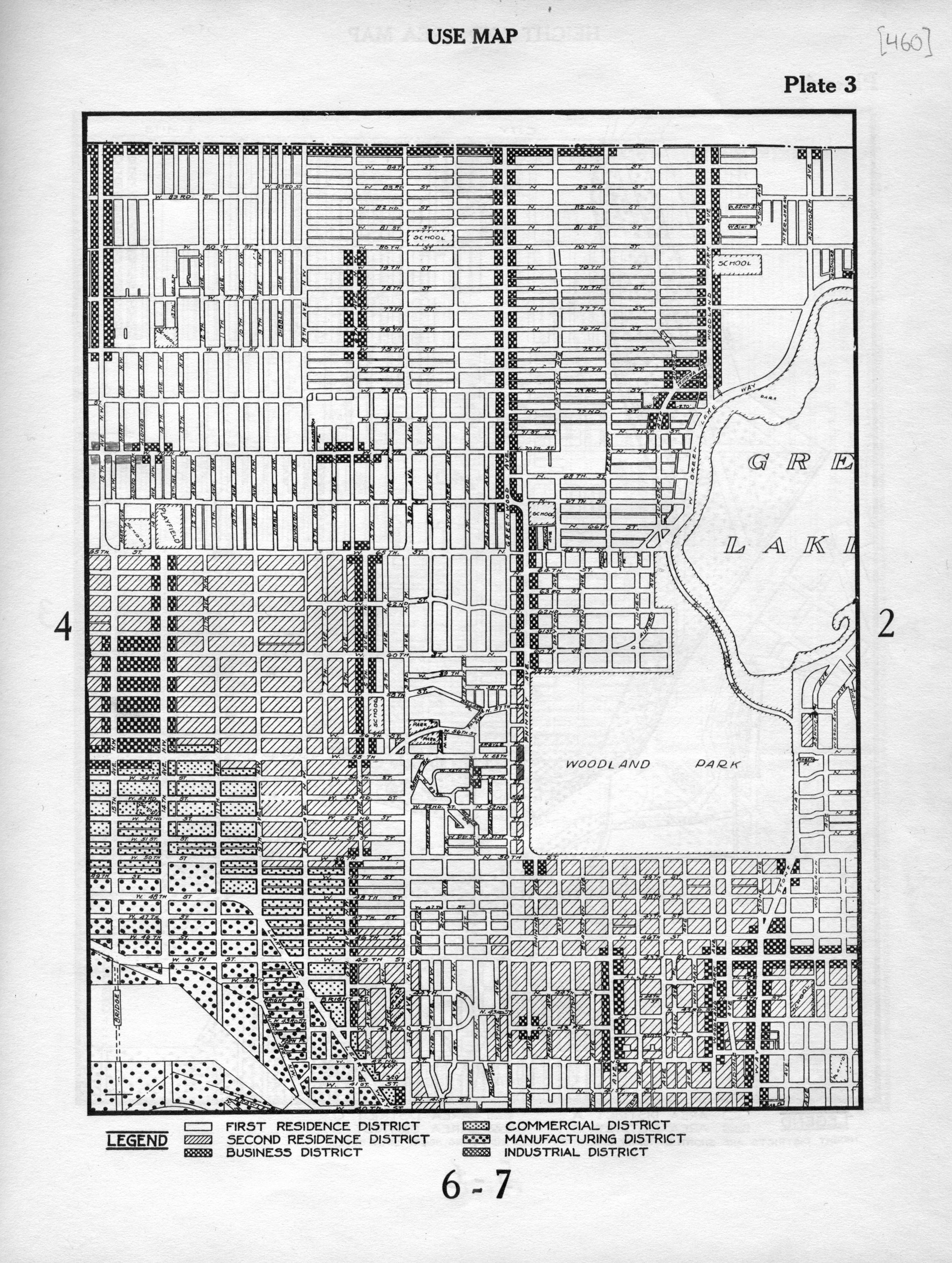
Zoning wasn’t about preservation, it was a tool. Macefield’s “Up” home became zoned for industrial. One hundred years later and it’s still not being used for industrial. The first zoning in Frelard was in 1923 (Researching Historic Land Use and Zoning, Seattle.gov).
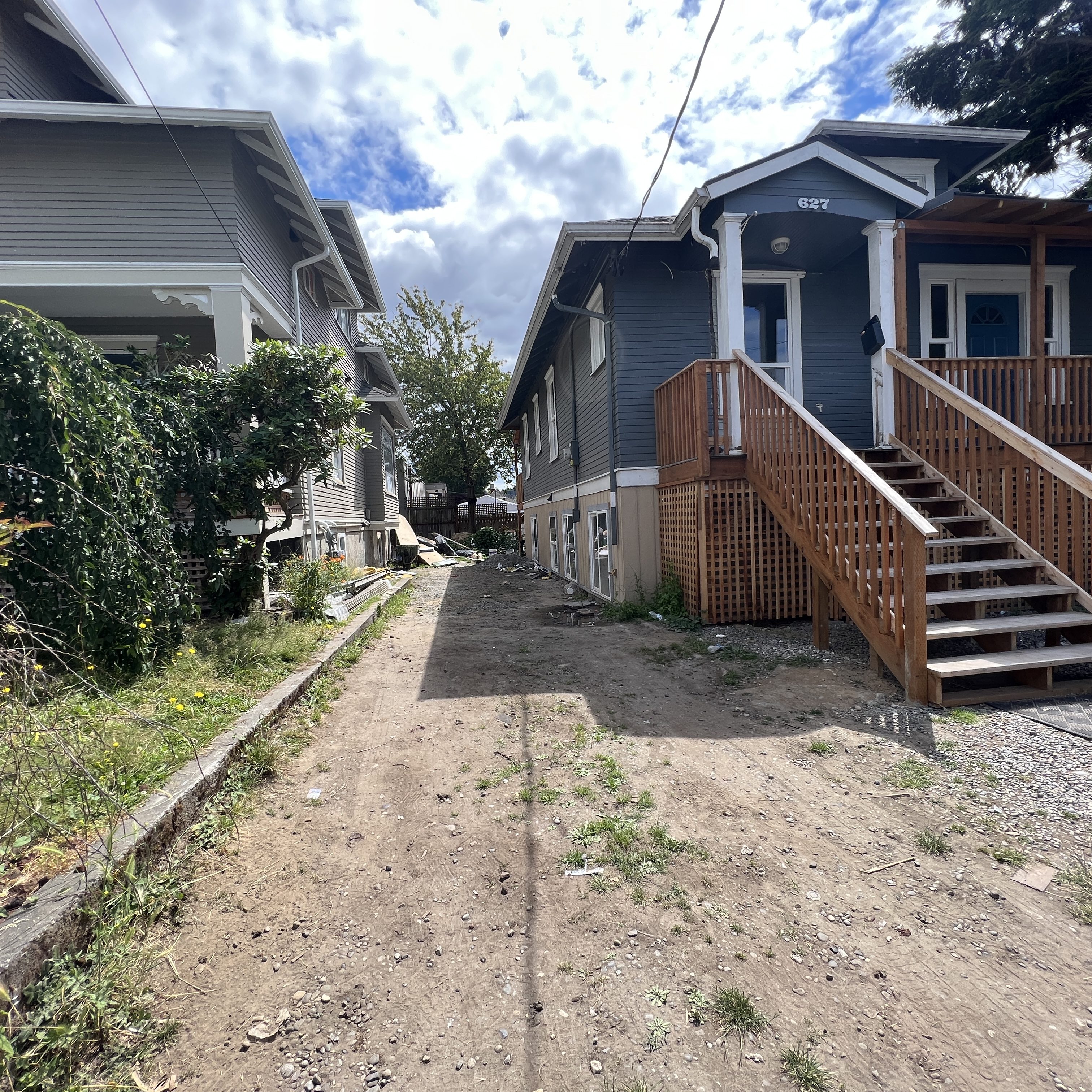
NW 44th St, near 8th Ave NW. MML (industrial) zoning binds existing residences from being able to expansively remodel. Leaving them small choices like, finishing an unfinished basement and restricts their property value. Why shouldn’t the homeowners on this block be able to build more apartments if they want to?
Continuing to support restrictive zoning isn’t neutral policy, it reinforces the inequality that was designed by prejudice and long absent politicians. If you’re interested to learn more, consider the 2017 book: ‘The color of law: A Forgotten History of How Our Government Segregated America’ by Richard Rothstein (Economic Policy Institute). Let’s fix zoning in Frelard!
 Upzone Frelard