Frelard’s industrial zoning is inappropriate
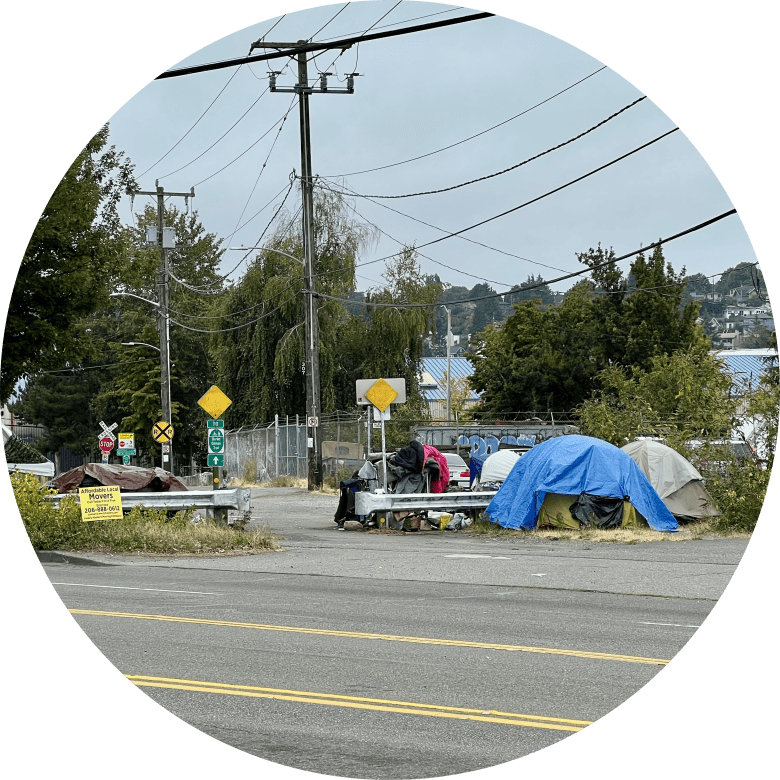
Do you realize how close Frelard is to the water? Today Frelard is largely zoned as an industrial waterfront along the Ship Canal from Portage Bay to the Shilshole area of Ballard (Seattle’s Frelard Straddles the Lines of Industrial, Residential and Commercial, Seattle magazine). A big portion zoned exclusively for industrial-use is blocking our enjoyment of the nearby waterfront for no good reason. It may have been reasonable a hundred years ago—bustling maritime services, manufacturers transporting cargo, employers of many local residents—but it doesn’t today. The reality here is vacant lots, “For Lease” signs, and homeless encampments ironically next to empty buildings. Upzoning for mixed-use would acknowledge contemporary industries; create housing, jobs, and bolster funding for social services (Industrial Rezoning in US Cities, Manhattan Institute).
Across Leary Way NW, near small businesses and homes, is endemic vacancy. Why not allow industrial-mixed in Frelard?

In 2023, Seattle’s industrial zoning became more restrictive (New laws limit big box stores in Seattle’s historic maritime and industrial zones, Axios). It happened despite data forecasting zero or negative maritime growth—from employing 1.1% in the Puget Sound region in 2010, to .8% in 20 years (Seattle Maritime and Industrial Strategy: Updated Employment Trends and Land Use Alternative, Seattle.gov). Also, despite excess industrial land across the Seattle Metro with over 400 million square feet available (Seattle industrial market report, Kidder Mathews). The good news is that zoning policy isn’t immutable. Earlier this year, mixed-use development was approved in SODO’s industrial zone (Seattle to get new ‘Markers’ District’ with affordable housing, industrial workspaces near T-Mobile Park, KUOW). Update: The Port of Seattle is fighting development of residencies within industrial zones (SODO housing plan hits a legal roadblock, Post Alley).
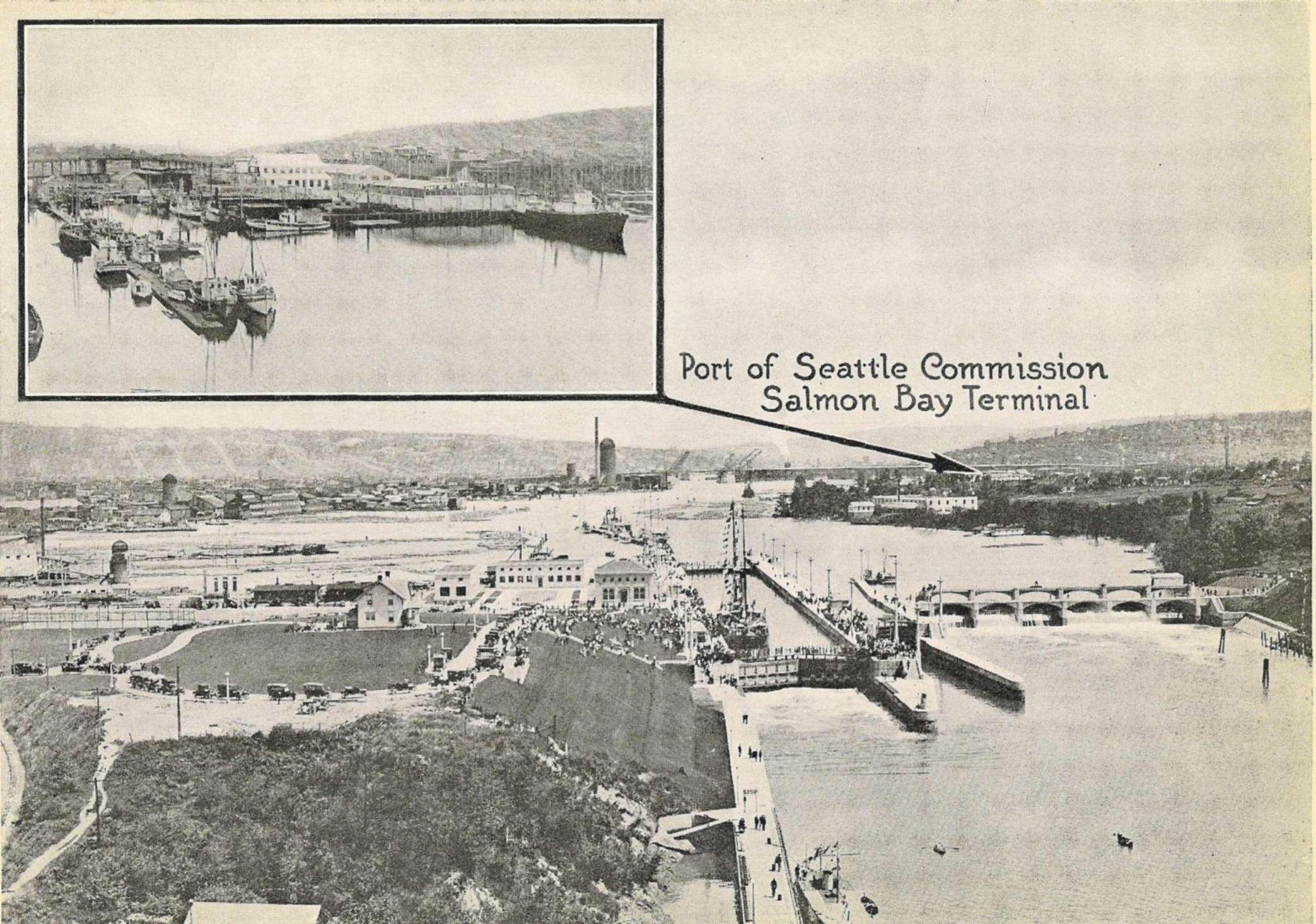
1919 photograph of Frelard (source wikimedia). See Gasworks at the center in the distance? Fremont is just to its left and the nearer large undeveloped wet area is Ballard. A lot has changed in a hundred years; why not free our potential to keep changing?
What are we waiting for? A lot of valuable land in Frelard has long been reserved for a fanciful industrial manufacturing renaissance. The land was largely a tidal zone before the Ballard Locks was built around 1917 (Working Waterfronts, Maritime Washington). A few years later, it was reserved for industrial-use only, but little did city planners know that the Industrial Revolution—as they knew it—was ending (Industrial Revolution, History). Walk around and you’ll find homes in industrial zones, built before zoning laws, never displaced by hungry industrialist. Rather, industrial entities have been slowly moving out. In 1991 Salmon Bay Steel closed after 29 years of operation (Salmon Bay Steel Kent, WA.gov). The site deemed too expensive and small to attract new Heavy-Industry companies and so our dear Fred Meyer grocery store was permitted (Plot thickens as Fred Meyer seeks to build store, Seattle Times). Just across the water, Ocean Beauty Seafoods cannery moved in 2018, after a hundred years of operation, citing improved logistics in Renton (Seattle and its relationship with industrial land, UW). In that place is a new space for a creative economy (West Canal Yards, Arcade NW). The likes of which could easily house more residents, if only zoning laws didn’t get in the way for no good reason. Today’s industries didn’t exist or operate like those a century ago. It’s time we embrace a contemporary understanding and update laws so Frelard can thrive!
Parts of Frelard used to be a tideflats, so it isn’t surprising that many areas are considered liquefaction prone today (pink areas on the map). Safe development requires technology developed in the past century (Reinforcing the ground beneath our feet, UW)


Like Frelard, Williamsburg in New York had a declining need for industrial land post WWII and the advent of containerization, so they upzoned in 2003 (Up-zoning New York City’s mixed-use neighborhoods, Journal of Planning Education and Research). Above is a picture from 2022 of a vibrant pizza restaurant. Below (Google) is the same spot ten years prior. Imagine how much more vibrant Frelard could be in a few decades!
Upzoning Frelard doesn’t necessitate exterminating industry. Baltimore, for example, created “Industrial Mixed-Use” zoning in 2017. Their policy reserves at least 50% of any ground floor for industrial-use and ensures environmental cleanup (Mixed-use zoning, Sustainable Development Code). Modern technology makes it feasible to operate clean industrial businesses alongside residences. Consider Nordhavn in Denmark, Hamburg’s HafenCity, or Amsterdam’s Eastern Docklands—there are many examples of how boat repair shops and living rooms can coexist on the same block or even in the same building. With the right policy for Frelard, allowing quality residential development near industry is possible.

Some Frelard residents already live like its Industrial Mixed-Use zoned (2017, Port of Seattle). However, current zoning prevents homeowners from adding dwelling units, and developers from turning vacant lots into vibrant mixed-use places.
What if it’s polluted? Land contaminated by Heavy Industry is also known as brownfield sites. Known areas of contamination and cleanup progress can be found here: Department of Ecology, WA.gov. It doesn’t matter how land will be used in the future, or who occupies it, pollution warrants cleaning. If not for people’s health or the environment, then because it increases nearby property value 5-15% (The value of brownfield remediation, Journal of the Association of Environmental and Resource Economists).
Note, there is unfortunate precedent for decreasing standards for low income housing. Some developers in the past have deceived people into believing the government kept impossibly high standards preventing affordable housing (Brownfields cleanup standards, Fordham Environmental Law Journal). Cleanup does incur a cost, but there are many ways to do it (Nature based solutions for contaminated land remediation and brownfeld redevelopment in cities, Science of the total environment).

Below, in gray-blue is the Maritime Manufacturing Logistics (MML) zone geared towards maritime-use and Heavy Industry (Industrial & maritime strategy, Seattle.gov). Left, a 2016 map shows that few lots were being utilized for such purposes (Port of Seattle). Today, one parcel operates Heavy Industry (Snow’s Seattle yard hits 100 build milestone, Workboat); it exists harmoniously with residents steps away.

The cost of blocking mixed industrial use zoning:
- Ignores people trying to live there anyways, despite lacking sanitation. In 2023, homelessness costs $17,900 a person in Seattle, yet the number of people becoming unhoused continues to rise (Despite big budgets, homeless agency is clueless in Seattle, Pacific Research Institute). For context, prisoners cost $63,600 a person in Seattle (As Washington’s prison population shrank, the cost of incarceration went up, KUOW). Public school costs $18,900 per student in Seattle (Seattle Public Schools, US News). Community college cost taxpayers $3,700, plus the students themselves pay $11,300 (Seattle Colleges). Meanwhile, upzoning to decrease homelessness costs $0.
- Opportunity cost (e.g., wages, sales, taxes, etc.) because upzoning would provide additional revenue (The economic consequences of industrial zoning, Land Economics).
- Ignores the needs of bigger and faster growing industries than maritime and manufacturing (Employment security department, WA.gov).
- Vacancy is liable for potential injuries, increased pests, crime, and anxiety (More than just an eyesore, Journal of Urban Health).
- Blocks access for local residents to enjoy Frelard’s waterfront—like they used to a hundred years ago. Walking along a waterfront can significantly reduce stress (The restorative health benefits of a tactical urban intervention: An urban waterfront study, Urban Environment and Health).
Shilshole Ave NW & NW 45th St. Upzoning could mean workers and residents of Frelard could share the waterfront.

 Upzone Frelard